


- Button-Down Long-Sleeve Shirts
- Button-Down Short-Sleeve Shirts
- Casual Shirts - Long-Sleeve
- Casual Shirts - Short-Sleeve
- Casual Tank Tops
- Full-Zip Sweatshirts
- Hoodies
- Performance Shirts - Long Sleeve
- Performance Shirts - Short Sleeve
- Pullover Sweatshirts
- Sport Tank Tops
- Sports Bras
- Sun Hoodies
- Sweaters
- T-Shirts - Long-Sleeve
- T-Shirts - Short-Sleeve
- Windshirts and Jackets
- Camera Bags and Packs
- Daypacks
- Expedition Packs (80+L)
- External Frame Packs
- Hydration Packs
- Kid Carriers
- Kids' Backpacks
- Laptop Packs and Bags
- Lumbar Packs
- Overnight Packs (30-50 L)
- Pack Accessories
- Running Packs
- School Backpacks
- Slings & Messenger Bags
- Travel Packs
- Weekend Packs (50-70 L)
- Weeklong Packs (70+L)
- Winter Packs
- Kid Carriers
- Kid's Alpine Skis - Bindings - Poles
- Kid's Gloves and Mittens
- Kids' Backpacks
- Kids' Goggles
- Kids' Harnesses
- Kids' Hats
- Kids' Ski Boots
- Kids' Ski Helmets
- Kids' Sleeping Bags
- Kids' Snowboard Bindings
- Kids' Snowboard Boots
- Kids' Snowboards
- Kids' Snowshoes
- Kids' Sunglasses
- Sleds
- Strollers and Joggers
- Toddler and Infant Gloves
- Toddler and Infant Hats
Showcase T-Bar Out, Quad Chair In on Blackcomb Glacier
This article was produced with AI assistance and editorial automation, overseen by the Retrade editorial team.
Key takeaways
- Whistler Blackcomb is building a fixed-grip quad chairlift to replace the Showcase T-Bar, which has run since 1988.
- Three of the T-Bar's towers stand on glacial ice. The new lift anchors into exposed bedrock on a line shifted north of the glacier.
- Construction started in spring 2026 and is targeting the 2026-27 season.
- The same recession already cost Whistler its Horstman T-Bar in 2020 and its summer ski camps.
- Glaciers in western Canada and the neighbouring U.S. lost roughly 12 per cent of their ice volume between 2021 and 2024.
Blackcomb is losing a lift that a generation of B.C. skiers learned the high alpine on. Whistler Blackcomb began construction this spring on a fixed-grip quad to replace the Showcase T-Bar, and ski-trade outlets reported the build moving into its next phase on August 12.
The T-Bar has run since 1988. What is retiring it is not age. It is the ice underneath it.
What is being built on Blackcomb right now
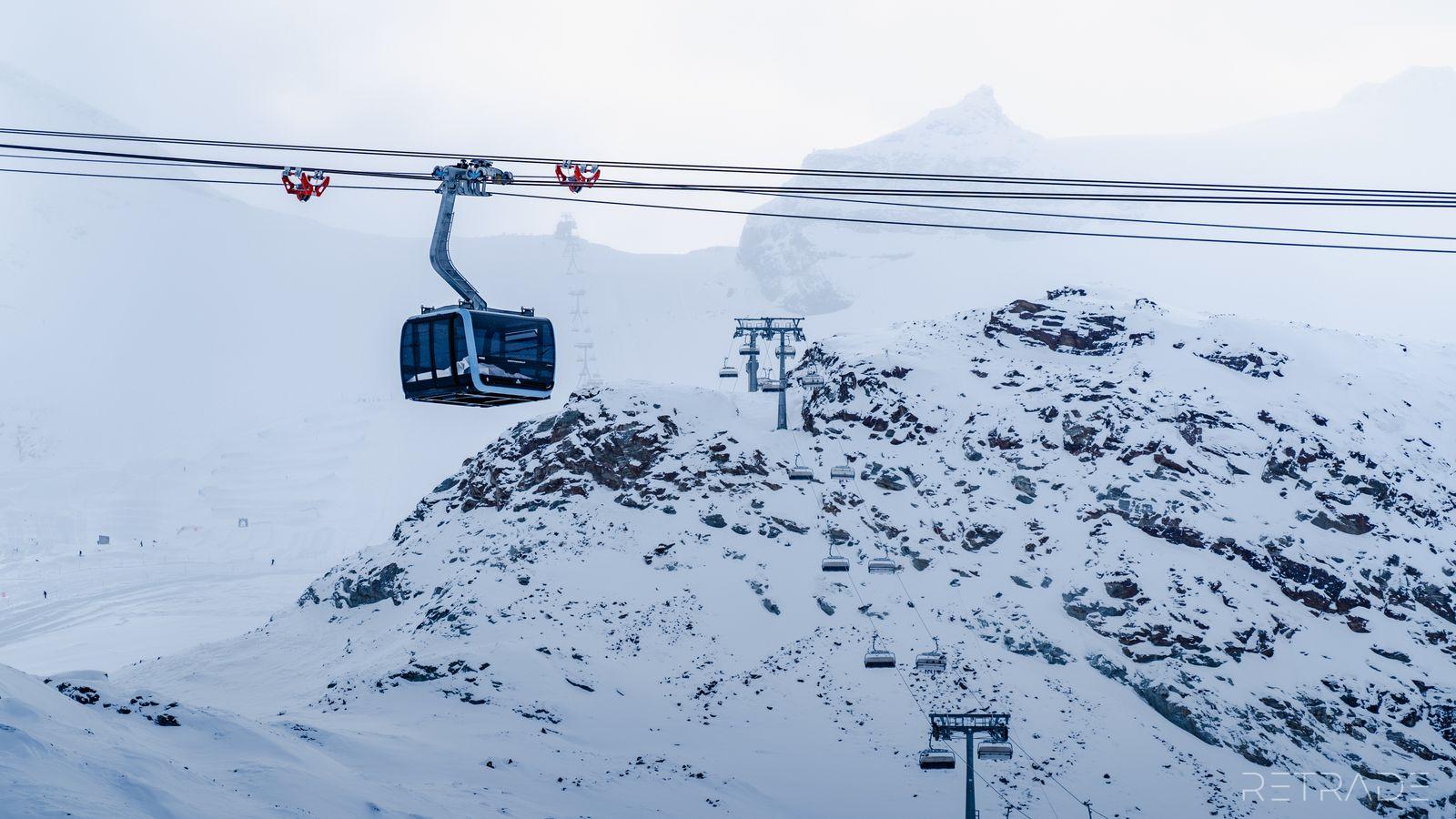
A fixed-grip quad chairlift is going up on a new alignment beside the old Showcase line. By mid-July, crews had finished major excavation and poured the top-terminal foundation and the first tower foundations. Steel towers and terminal structures were scheduled for installation later in the summer, targeting a 2026-27 opening.
Photos the resort put out in July show excavators parked on bare rock and helicopters working the alignment — the standard way to move steel above the last road. The project sits inside Vail Resorts' 2026 capital plan of roughly US$234-239 million, a figure that covers the company's whole year, not this lift.
The builder is Skytrac, a North American maker of fixed-grip lifts. Lift databases list the new Showcase at 521 metres long with 148 metres of vertical, running at 2.5 metres per second for a ride of roughly four minutes, and rated at 2,400 people an hour. Whistler Blackcomb has not published its own spec sheet, so treat those numbers as the industry record rather than a resort statement.
Why a lift from 1988 had to go
Three of the Showcase T-Bar's towers stand directly on glacial ice. As that ice thins and moves, the towers need repeated repositioning and repair. And when snow levels drop far enough, the track becomes too steep to ride safely — so in recent seasons the lift has opened only sporadically.
If you have never ridden one: a T-Bar is a surface lift. You lean against a bar and get dragged uphill on your skis, weight on the snow the whole way. That makes it cheap and wind-tolerant, and completely dependent on a continuous snow surface at a rideable angle. A glacier losing depth every year stops providing one.
A chairlift does not care. It carries riders over the terrain instead of along it, so the surface below can change without closing the lift. The new alignment shifts north to serve the glacier without running across it, with towers and terminals anchored into exposed bedrock rather than ice. Whistler Blackcomb COO Belinda Trembath said the upgrade will make it "easier and more enjoyable for guests to access the incredible terrain on Blackcomb Glacier," in comments reported by SnowBrains.
The bigger story is the ice, not the lift
Glaciers in western Canada and the neighbouring United States lost about 22.2 gigatonnes of ice a year from 2021 to 2024. That is roughly 12 per cent of their total volume gone since 2020, and about double the melt rate of the previous decade. It is the trend the new lift is being engineered around.
Those numbers come from a study published in Geophysical Research Letters in June 2025, led by Brian Menounos, a professor at the University of Northern British Columbia and chief scientist at the Hakai Institute.
One finding matters for anyone who watched the sky in 2023. That was Canada's worst wildfire season on record, and also the year glacier albedo — how much sunlight the ice reflects — dropped most sharply. Soot settles, the darker surface absorbs more heat, and the melt accelerates itself. Snowfall covers the stain; a thin winter does not.
What Whistler already lost to the same force
Whistler Blackcomb suspended summer ski and snowboard camps on the Horstman Glacier indefinitely, pointing to melt and shrinking snowpack. Momentum Camps, which had run that programming since 1992, shifted its Whistler sessions to May. The nearby Horstman T-Bar had already been pulled in 2020 for the same reason.
That is the part locals still feel. Summer laps on the Horstman were a training pipeline as much as a novelty — where Canadian freestyle athletes put in July mileage. The Showcase project answers the same problem the camps could not.
What changes for your season
For most skiers, the practical change is reliability rather than new terrain. A chairlift bolted to bedrock should open on a predictable schedule where a surface lift on moving ice could not. Expect the usual first-season caveats anyway: wind holds, weather closures, and an opening date that firms up closer to winter.
If you are newer to the mountain, Blackcomb Glacier terrain sits high, stays cold, and holds snow when lower runs go sticky. If you already ski it, steadier access mostly changes planning — you can build a day around glacier laps instead of checking whether the lift spun at all.
What it means for the gear in the basement
Nothing about a new lift makes your skis obsolete. But steadier glacier access changes what gets used: everyday skis you do not mind scraping over an early-season rock, and goggle lenses that cope with flat light on a big white surface.
Late August is also when off-season turnover starts. If last winter ended with a setup you have outgrown, this is the stretch when used alpine skis start moving again, and when it is worth listing what you are done with.
What is still unconfirmed
Whistler Blackcomb has not published an opening date, and the specifications above come from the lift-industry record rather than the resort. The original announcement also noted the project was subject to regulatory approvals. We will update this piece once the resort confirms its own numbers.
Frequently asked questions
When will the new Showcase Chair open?
Whistler Blackcomb is targeting the 2026-27 winter season. Construction began in spring 2026, with steel scheduled to go up over the summer. No specific date has been published, and lift projects at this elevation routinely slip on weather.
Is summer skiing coming back to Whistler?
Not on the Horstman Glacier, at least not as it was. The summer camp programming was suspended indefinitely because of melt and snowpack loss. Momentum has kept running Whistler camps in May. The new chairlift is a winter-access project.
Why replace a T-Bar with a chairlift instead of rebuilding it?
A T-Bar depends on a continuous snow surface at a rideable gradient, which a receding glacier no longer guarantees. A chairlift carries riders above the surface, and its towers can sit on bedrock off the ice. Rebuilding the T-Bar would have rebuilt the same vulnerability.
Last updated: August 17, 2026.